
Carroll Federal Release Paths
Federal custody can begin with a court-ordered detention and a U.S. Marshals Service placement. USMS may use federal, state, local, or private beds. A person held physically in a county jail can still be a federal prisoner for disposition purposes. After conviction and commitment, BOP may designate the person to a federal institution. These stages determine which record controls.
A federal court docket can show the legal release order, acquittal, sentence, or commitment. USMS processing documents the physical disposition during pretrial custody. BOP locator and records cover the sentenced prison stage. Departure may lead to the community, a residential reentry center, supervised release, another institution, or a detainer. The word “released” must be read in the context of the agency and destination.
Search Federal Release Records
For a person who entered BOP custody, use the BOP Inmate Locator. Search by register, DCDC, FBI, or INS number when one is known. The name route permits optional age, race, and sex fields. Match the register number and identity details before reading the result.
- Choose an agency number for the most exact search.
- Otherwise enter the full name and useful optional fields.
- Compare all returned identity details.
- Read Release Date and Location together.
- Distinguish a past date from a projected future date.
- Check the docket and receiving system when another custody episode is possible.
A past release date paired with “RELEASED” or no current BOP facility supports exit from BOP custody. It does not prove the end of supervised release or freedom from another agency.
BOP Status Terms Matter
BOP’s locator generally covers records from 1982 forward. Results show identifying fields, Release Date, and Location. A future release date is projected. “UNKNOWN” is not a release finding. “IN TRANSIT” signals movement. “Not in BOP Custody” can mean release from BOP, custody in another justice system, or a status outside the locator’s institution field.
| Display | What it supports |
|---|---|
| Past date and RELEASED | Exit from the described BOP custody episode, subject to locator caveats. |
| Future Release Date | A projection that may change. |
| IN TRANSIT | Movement between placements, not community release. |
| Institution location | Current or recorded BOP placement as defined by the locator. |
| Not in BOP custody | No current BOP custody shown, but another custody or supervision may exist. |
Note: Read the BOP date and location as a pair, then verify the destination when a detainer is possible.
BOP Locator Image Guide
The manifest’s official BOP locator capture shows the federal search route used for released records.
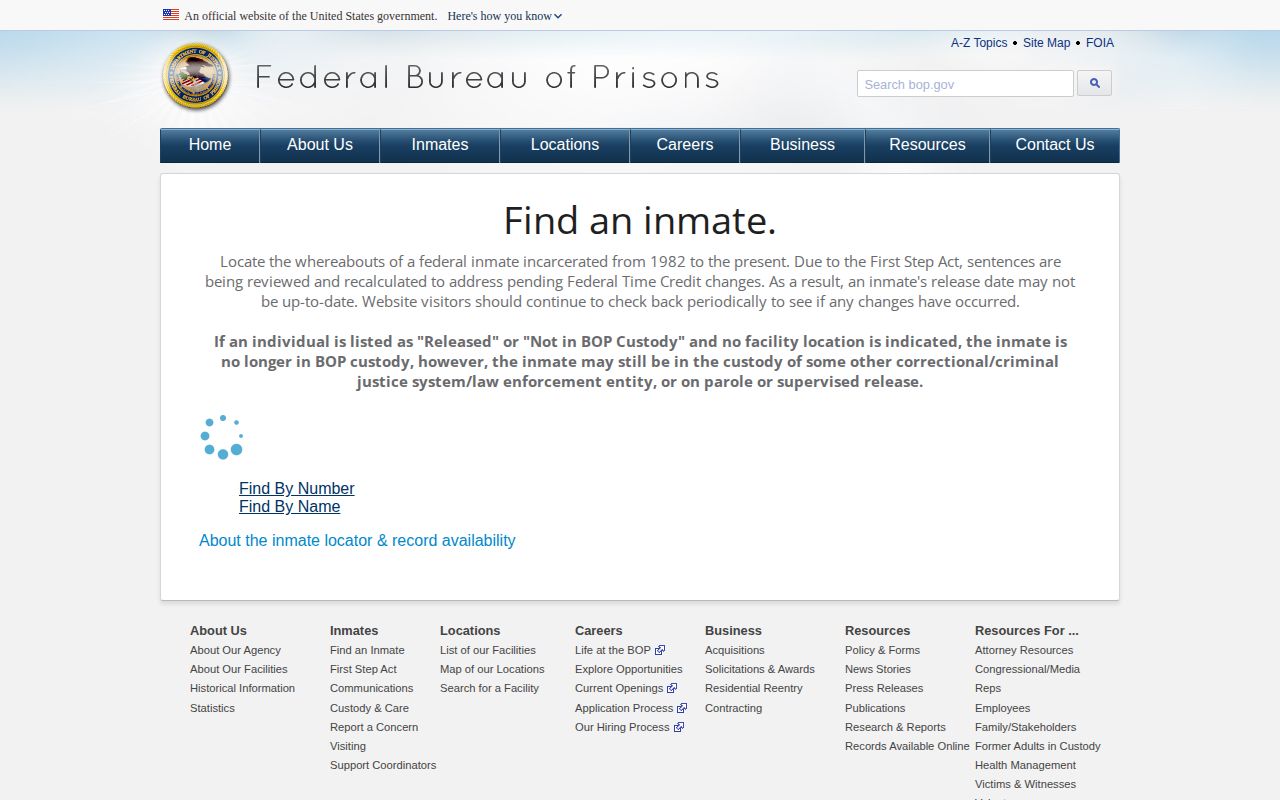
The form is nationwide and federal only, so it should not be used to infer a Carroll County jail or IDOC release.
Federal Court Release Orders
Carroll County lies in the Western Division of the Northern District of Illinois, making Rockford and Northern District records the logical federal court route for local federal cases. PACER provides the federal docket search. A docket may show detention, release conditions, acquittal, judgment, sentence, or a later order. PACER’s nationwide Case Locator is updated roughly nightly, while sealed and some older criminal documents may not be public and fees can apply.
The court order is legal authority. It is not always the same as the physical processing record. A judge may order release while USMS checks conditions or another hold. Conversely, transfer to BOP can occur while later case activity continues. Preserve the docket entry and compare it with the agency disposition rather than treating “case closed” as an exit time.
The successful manifest image comes from the official PACER entry.
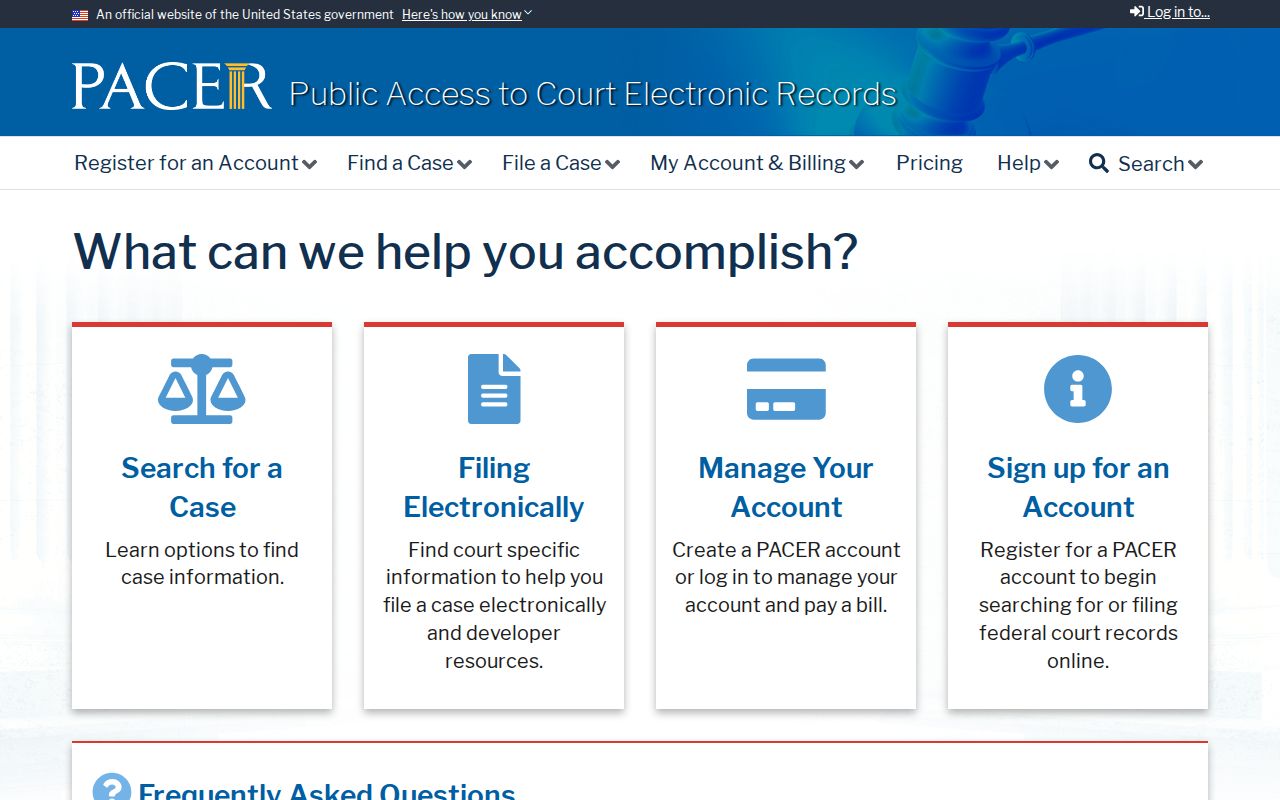
PACER supplies the legal case path, while BOP or USMS establishes the relevant physical custody event.
USMS Custody Disposition Records
USMS holds federal defendants from court-ordered detention until release, acquittal, or delivery to BOP. It does not offer a public released-prisoner name locator like BOP. For a pretrial episode, use the federal docket for the order and a focused USMS FOIA request for releasable custody-disposition information.
Identify the person, federal case, approximate custody dates, and any known prisoner number. Ask for existing records that state the date, disposition, and receiving agency or destination. Federal identity and authorization rules may apply. If the disposition says delivery to BOP, continue with BOP. If it names a local jail or another authority, confirm that receiving record separately.
Request Federal Release Records
The BOP FOIA process is the formal route for more detail than the public locator shows. A narrow request can seek final sentence computation and releasable release or disposition paperwork. Provide the register number and enough identifying information to locate the file. BOP’s Notice of Release and Arrival form illustrates fields such as release method, community or detainer release, detaining agency, transportation, destination, proposed residence, supervision jurisdiction, and reporting directions.
The blank form shows which concepts BOP records. It does not mean every completed person-specific form is public. Ask only for the parts needed, follow federal consent rules, and expect lawful redaction. For federal prison history before 1982, BOP directs researchers toward National Archives guidance because locator coverage is generally later.
Federal Detainers and Transfers
A detainer can send someone from BOP or USMS custody to another government. Release from the federal agency then ends one custody episode but may begin another. The federal record’s destination is essential. Search the named county, state, or immigration system after confirming the federal disposition.
ICE’s Online Detainee Locator System covers current ICE custody and a limited recent-release window. An Illinois state transfer belongs in IDOC’s system. A transfer to the Carroll County Correctional Facility belongs in Sheriff records. Avoid using a BOP “released” result as proof that no later custody exists.
Federal Supervision After Release
Federal supervised release is a court-imposed period served in the community after prison. It is not BOP incarceration, Illinois MSR, or Carroll County probation. The federal judgment and docket provide the legal term and later court actions. A BOP released result may coexist with active federal supervision.
Conditions and any modification or revocation should be verified through the court record and appropriate federal supervision channel. The BOP locator is not built to certify completion of supervision. State clearly whether a source proves prison exit, continued supervision, or the end of the federal sentence.
Older Federal Release History
The BOP locator is most useful for prison records from 1982 forward. A case outside that period may require National Archives research, a federal docket, and agency records. Begin with a known case number, register number, sentencing district, and approximate dates. Those identifiers reduce false matches and help the receiving office locate a record that is no longer in a current public system.
Historical research still needs the same separation of proof. A judgment shows the legal sentence. An archived prison or agency record may establish the physical disposition. A later court entry may show supervision or revocation. Do not force one old document to answer all three questions. If a public index omits the person, describe the source’s coverage limit and continue through the appropriate official archive.
Carroll Federal System Contact
This page describes a network rather than one building. BOP operates sentenced facilities, USMS controls many pretrial custody movements, and the federal court controls orders. FCI Thomson at 1100 One Mile Road, Thomson, Illinois 61285 is the federal institution within Carroll County and can be reached at 815-259-1000. It remains outside Sheriff control.
BOP Inmate Locator for sentenced custody
PACER for federal court orders
USMS FOIA for pretrial custody disposition
BOP FOIA for prison release records
Use the FCI Thomson release page when that named institution is the known placement. For other federal facilities, the same national record boundaries apply.